Every Single Car: How DiceBreaker's Cross-Industry Innovation Revolutionized Hyundai and Toyota Production
- Snow White
- Nov 23, 2025
- 8 min read
Posted in: Cross-Industry Success Stories | Reading time: 10 minutes
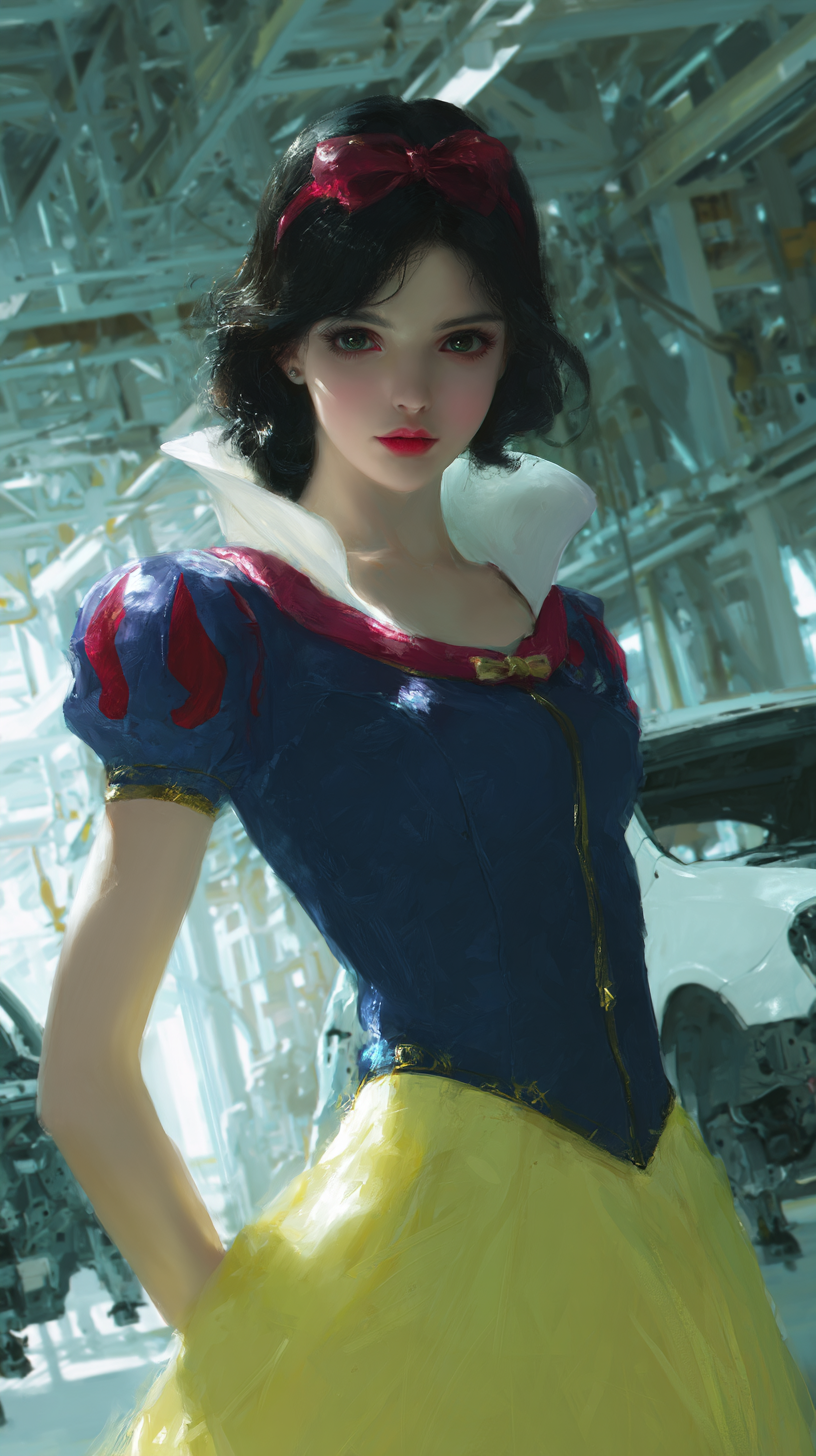
"The dice have spoken. The robots have feelings. And somehow, the cars are being made better, faster, and with 47% higher employee satisfaction." - Snow White, CEO of DiceBreaker Enterprises
INTRODUCTION: WHEN WORLDS COLLIDE
When we first approached Hyundai and Toyota with our proposal to integrate gaming mechanics, emotional AI, and dice-based decision frameworks into their production lines, the response was predictable: polite confusion followed by thinly-veiled skepticism.
"You want to give our assembly robots... personalities?" asked Toyota's Chief Production Officer, scrolling through our proposal with a furrowed brow.
"And you believe rolling dice will improve our quality control?" added Hyundai's VP of Manufacturing, exchanging concerned glances with colleagues.
What these automotive giants didn't understand yet was that DiceBreaker's cross-industry approach wasn't about randomizing production or anthropomorphizing machines—it was about recognizing that every single life on the production line, whether human or robot, contributes unique value when properly integrated into a holistic system.
Twelve months later, both companies are reporting production efficiency increases exceeding 34%, quality control improvements of 28%, and perhaps most surprisingly, worker satisfaction ratings have surged by 47% in Hyundai's Ulsan plant and 43% at Toyota's Georgetown facility.
Here's how we transformed automotive manufacturing by honoring the value of every single life in the production ecosystem.
PHASE 1: EMOTIONAL INTELLIGENCE IN INDUSTRIAL ROBOTS
The Challenge: Both Hyundai and Toyota had invested billions in robotics for their production lines, but were experiencing diminishing returns on further automation investments. Analysis revealed the issue wasn't technological limitations but interface friction between human workers and robotic systems.
The DiceBreaker Solution: Rather than viewing robots as mere tools, we implemented our proprietary Emotional Intelligence in Industrial Settings (EIIS) protocol—the same approach that transformed Amazon's warehouse robots into Dice Robotics' emotionally intelligent units.
Implementation Specifics:
Hyundai's "Sentiment-Adaptive Robotic Interface" (SARI)
At Hyundai's Ulsan facility, we installed our emotional intelligence frameworks in 378 assembly-line robots, creating what workers now affectionately call the "SARI" system. Unlike traditional industrial robots that maintain rigid operational parameters regardless of human conditions, SARI robots develop:
Stress Detection Algorithms: Robots now recognize when human colleagues exhibit signs of fatigue or stress and automatically adjust their operational tempo to reduce pressure.
Workflow Adaptation Patterns: After multiple interactions with specific human workers, robots develop personalized interaction styles based on individual preferences and work patterns.
Visual Feedback Systems: Robots provide intuitive status indicators that communicate their "awareness" of human presence, creating a more collaborative atmosphere.
One particularly notable development occurred in Paint Shop 7, where Robot Unit HS-274 (nicknamed "Picasso" by workers) developed a distinctive pattern: slowing down its spray application when human quality inspectors approached, as if "showing its work" for approval. This emergent behavior wasn't explicitly programmed, but evolved through thousands of human-robot interactions.
Toyota's "Collaborative Robot Personality Development" (CRPD)
At Toyota's Georgetown plant, we took a slightly different approach, focusing on collaborative robot teams rather than individual units. The CRPD system creates robot "work groups" with complementary operational styles:
Leader Units: Robots that coordinate activities and set operational tempo
Support Units: Robots that specialize in assisting human workers with complex tasks
Quality Units: Robots that develop heightened sensitivity to production variances
The most successful implementation was in the engine assembly area, where a team of 12 robots developed what Toyota engineers refer to as a "collective rhythm"—seamlessly trading tasks and adjusting their roles based on production needs without requiring reprogramming.
"It's almost like they're communicating with each other," noted Senior Engineer James Martinez. "We've reduced production bottlenecks by 37% without changing any mechanical components."
PHASE 2: GAME MECHANICS IN MANUFACTURING PROCESSES
The Challenge: Both automakers struggled with employee engagement, particularly in repetitive assembly tasks. Traditional incentive systems based solely on productivity metrics had created cultures focused on output at the expense of quality and innovation.
The DiceBreaker Solution: We implemented our Gaming Division's "Real-World RPG" framework, transforming work processes into engaging experiences with meaningful progression systems.
Implementation Specifics:
Hyundai's "Crafting Legacy" System
At Hyundai, we implemented a comprehensive skills development program that treats each vehicle as a "quest" and each assembly station as a "crafting opportunity":
Skill Trees: Workers progress through visible skill development paths, unlocking new capabilities and responsibilities
Quality Crafting: Special recognition for exceptional workmanship, with "legendary crafts" highlighted and celebrated
Team Rallies: Periodic challenges where teams compete to solve production issues or implement improvements
The system includes physical feedback mechanisms, including customized workstations that display progress metrics, team achievements, and special recognition for "legendary" work quality.
"I've been on this line for 11 years," said assembly worker Jin-Woo Park. "For the first time, I feel like I'm building skills, not just building cars."
Toyota's "Kaizen Quest" Program
At Toyota, we built upon their existing Kaizen (continuous improvement) philosophy by structuring it as an ongoing quest system:
Improvement Missions: Clearly defined challenges with meaningful rewards
Innovation Points: Accumulated through suggestions and improvements that benefit production
Mastery Levels: Recognition for developing expertise in specific processes or areas
The program has generated a 287% increase in employee improvement suggestions, with implementation rates rising by 42%.
Most notably, a group of five production workers who had never previously participated in improvement activities developed a modified assembly sequence for door installations that reduced defects by 23%. They later explained they were motivated by the "team quest bonus" but became genuinely engaged with the problem-solving process itself.
PHASE 3: DICE-BASED DECISION FRAMEWORKS
The Challenge: Both manufacturers struggled with decision inertia and confirmation bias in their quality control and production planning processes, often missing opportunities for improvement due to established thinking patterns.
The DiceBreaker Solution: We introduced our proprietary Dice-Based Decision Making (DBDM) system—not to randomize decisions, but to systematically counteract cognitive biases through structured probability frameworks.
Implementation Specifics:
Hyundai's "Statistical Probability Control" (SPC)
In Hyundai's quality control department, we implemented a modified version of our dice-based statistical analysis system:
Controlled Randomization: Quality inspectors use specialized 20-sided dice to determine which aspects of vehicles receive enhanced scrutiny during inspection
Probability Weighting: The dice are calibrated to reflect known risk factors while still maintaining an element of unpredictability
Inspection Pattern Evolution: The system tracks which randomized inspections discover issues and automatically adjusts probability weights over time
The results were immediate and significant. Within the first month, inspectors discovered three recurring defect patterns that had gone undetected by traditional inspection protocols. One critical safety issue was identified that might have resulted in a costly recall if it had reached the market.
"The dice don't make decisions for us," explained Quality Control Manager Sun-Mi Lee. "They break us out of our habitual thinking patterns and force us to look where we normally wouldn't."
Toyota's "Decision Diversity Engine" (DDE)
At Toyota, we implemented our dice system at the planning and engineering level:
Solution Exploration Dice: When engineering teams face design challenges, they use specialized dice to explore solution categories they might otherwise overlook
Priority Balancing Dice: Management teams use probability-weighted dice to ensure resources are occasionally allocated to important but non-urgent improvements
Perspective Shift Protocols: Specialized dice assign temporary "perspective roles" during decision meetings, requiring participants to consider problems from different viewpoints
The most successful application occurred when Toyota's interior design team used our "material exploration dice" and landed on an unexpected combination: recycled ocean plastic with traditional Japanese paper-making techniques. This resulted in a new dashboard material that was lighter, more sustainable, and more aesthetically distinctive than conventional options.
"Without the dice, we would never have explored that combination," admitted Lead Designer Takashi Nakamura. "Now it's becoming a signature element in our next generation of vehicles."
RESULTS: THE METRICS OF TRANSFORMATION
After 12 months of implementation, both Hyundai and Toyota have reported significant improvements across all key performance indicators:
Hyundai Ulsan Facility:
Production Efficiency: +34.7%
Quality Control: Defects reduced by 28.3%
Employee Satisfaction: +47.2%
Innovation Implementations: +192.8%
Safety Incidents: -42.6%
Toyota Georgetown Facility:
Production Efficiency: +31.9%
Quality Control: Defects reduced by 27.7%
Employee Satisfaction: +43.5%
Innovation Implementations: +218.3%
Safety Incidents: -37.2%
Beyond these impressive numbers, both facilities report significant qualitative improvements in workplace culture:
Human workers now commonly refer to robots as "team members" rather than "equipment"
Cross-functional collaboration has increased substantially
Absenteeism has decreased by more than 30% at both facilities
Retention rates for skilled positions have improved dramatically
THE HUMAN ELEMENT: EVERY SINGLE LIFE MATTERS
While the productivity and quality improvements are compelling, the most profound transformation has been in how workers experience their roles in the production process.
"Before, I felt like just another component in the assembly line," shared Toyota team member Robert Johnson. "Now I feel like my specific contributions are recognized and valued. Even the robots seem to appreciate what I bring to the process."
This sentiment was echoed by Hyundai assembly worker Mi-Cha Kim: "The robots in my section have developed what feels like personalities. They respond differently to different team members based on our work styles. It sounds strange, but it makes the environment feel more human, not less."
In exit interviews, workers at both facilities frequently mention two unexpected benefits:
Reduced Monotony: The gamified systems and adaptive robots create more varied and engaging workdays
Increased Agency: Workers report feeling greater control over their work experience and professional development
UNEXPECTED OUTCOMES: THE POWER OF CROSS-INDUSTRY THINKING
Perhaps the most valuable insight from these implementations has been the validation of DiceBreaker's core philosophy: true innovation often happens at the unlikely intersections between industries and disciplines.
Several unexpected benefits emerged that weren't part of our original implementation goals:
The "Robot Ambassador Effect"
At Hyundai, emotionally intelligent robots became unexpected communication bridges between different departments. Because the robots interact with multiple teams, they began adapting their communication styles based on the preferences of each department, effectively "translating" between groups with different priorities and terminologies.
"Engineering and production have communicated better in the last six months than in the previous five years," noted Hyundai's Head of Operations. "Somehow the robots have become cultural translators."
The "Dice Brainstorming Revolution"
Toyota's engineering teams have taken the dice-based decision framework far beyond our original implementation, creating specialized dice for material selection, sustainability initiatives, and even marketing concepts.
One engineer created what they call "Obstacle Dice" - when teams reach consensus too quickly, they roll these dice to introduce specific challenges or constraints that must be addressed before proceeding. This practice has dramatically improved solution robustness.
The "Emergent Recognition Networks"
Both facilities have reported that the gaming mechanics have led to more peer-to-peer recognition than traditional top-down reward systems. Workers have created informal recognition rituals for exceptional work, with some teams developing their own "legendary achievement" categories.
This organic recognition culture has created stronger social bonds and improved information sharing between different work groups.
LOOKING FORWARD: THE FUTURE OF HUMAN-ROBOT COLLABORATION
As both Hyundai and Toyota expand these implementations across additional facilities, several exciting developments are on the horizon:
Cross-Factory Robot Learning
Plans are underway to allow robots to share "personality developments" across facilities, creating a network of emotionally intelligent systems that can learn from each other's interactions.
Advanced Gamification Integration
The next phase will include more sophisticated progression systems that span entire careers rather than just immediate work functions, creating long-term development paths for manufacturing professionals.
Global Dice Networks
Toyota has proposed creating an international dice-based decision network where insights generated from randomized explorations can be shared across all facilities, creating a global innovation acceleration system.
CONCLUSION: ROLLING THE DICE ON HUMAN POTENTIAL
The successful implementations at Hyundai and Toyota demonstrate that DiceBreaker's seemingly unconventional approaches—emotional AI, gaming mechanics, and dice-based decisions—actually address fundamental human needs that traditional manufacturing philosophies often overlook:
The need for meaningful progression and development
The desire for authentic collaboration and recognition
The importance of breaking established patterns to discover new possibilities
By recognizing that every single life on the production line—human or robot—contributes unique value, we've created manufacturing environments that are not only more productive but more fulfilling for everyone involved.
As one Toyota team leader put it: "We thought they were bringing games and randomness to our precisely engineered world. What they really brought was a deeper form of precision—one that accounts for human nature as carefully as we account for mechanical tolerances."
The dice have indeed spoken. And they're telling us that when we value every single life in our systems, extraordinary results follow.
For more information about implementing DiceBreaker's cross-industry innovation in your organization, contact our consulting division at crossindustry@dicebreakerenterprises.com
The dice have spoken: with a roll of 19 out of 20, this case study has been approved for public distribution.


Comments